Why a Small Ritual Helps a Pastime Find Its Place
A small ritual for a pastime links an ordinary daily cue to a modest return, helping you make room for reading, drawing or music without a rigid schedule.
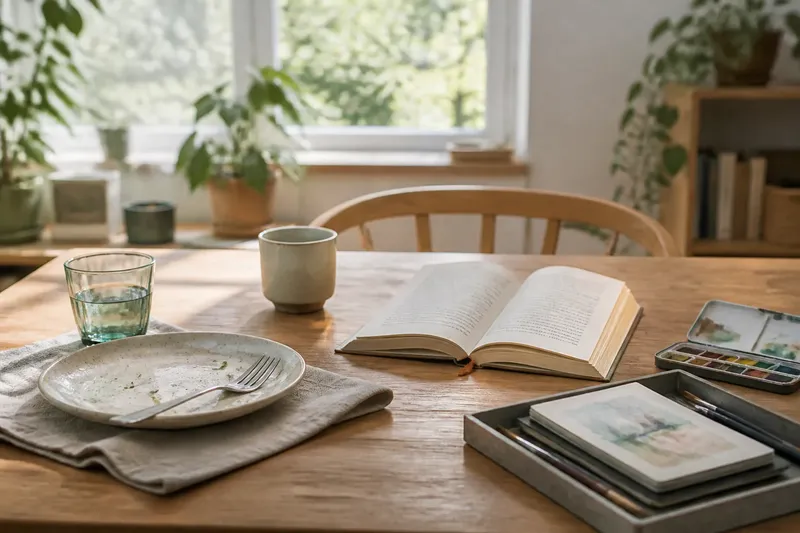
A small ritual for a pastime can make returning to it easier by attaching it to something already present in the day. Set a paperback beside your lunch plate, for instance, and the cleared table becomes a reminder to read a few pages—not a demand to protect a fixed hour. The ritual offers a door back in; it does not dictate how long you must stay.
That distinction matters. A pastime can lose its appeal when each return seems to require a fresh decision: find the sketchbook, choose a subject, clear a space, decide how much time is enough. A simple cue reduces those preliminaries while leaving the activity itself open. The aim is not to turn leisure into another obligation, but to make its first small action easier to notice.
What The Cue Does
A useful cue is a concrete event, object or change of place that can naturally precede an activity. Lunch ending, the kettle boiling, arriving home or putting away a work bag may all work. The connection should make sense in your actual day; an arbitrary alarm can be easy to silence and forget.
Pair the cue with an action small enough to begin without negotiating with yourself. Opening the book, laying out coloured pencils or playing one prepared piece of music counts. You can carry on if you want, but the ritual is complete once it has made the activity available.
Think of a cue like a bookmark. It marks where you might resume, rather than insisting that you read for a particular stretch. A book left open on a safe surface can point towards reading; a closed book hidden in a cupboard asks you to remember it, retrieve it and start again from scratch.
Not every pastime benefits from the same arrangement. Reading, knitting or keeping a notebook may be easy to pause and resume. A group activity, a long walk or a project requiring a dedicated workspace may need a different kind of invitation, such as packing a bag the evening before or keeping a note of the next outing. The cue should suit the activity, not force the activity into a convenient shape.
Choose A Natural Anchor
Start with a point in the day that already happens often enough to be useful, but does not make leisure compete with an essential task. The end of lunch may suit a few pages. The moment after breakfast might suit a short sketch. If evenings are unpredictable, a cue tied to getting home may be kinder than one tied to a precise time.
Before settling on an anchor, ask yourself:
- Does this event happen in a recognisable way on most ordinary days?
- Will the pastime be possible at that point, given the room, light, noise and people around me?
- Does the cue feel like an invitation, or does it already sound like another demand?
- Can I make the activity visible or ready without cluttering a shared space?
If the answer to the last question is no, choose a portable reminder instead. A bookmark in a bag, a sketchbook in a drawer near the kitchen, or a short note on a music stand can make the next action easy to recall without claiming a permanent patch of the home.
Imagine that you want to return to watercolour painting, but the dining table is used for meals and other household tasks. You might place a small tin of paints and a postcard-sized pad in a labelled tray, then take the tray out after lunch when the table is free. If the meal runs late, the tray stays put and there is no missed appointment to make up; if the table is occupied, a quick colour study in a notebook can be the smaller return.
A Gentle Weekly Rhythm
A ritual becomes easier to judge when you give it a little time without treating that time as a trial. A loose week can show whether the cue fits your real routines, whether the materials are ready and whether the activity still feels welcome. There is no need to keep a score. Notice what makes starting simpler and what repeatedly gets in the way.
- At the start: Choose one pastime and one ordinary anchor. Write the first action in plain language, such as “open the novel after lunch” or “put on the headphones after breakfast”.
- On the first available day: Prepare only what makes that action easy. Put the book within reach, leave the notebook and pen together, or save the music you want to play.
- When the cue arrives: Do the smallest welcoming action. Read a page, draw a line, or play a few notes; continue only if you genuinely want to.
- When the day is crowded: Let the cue pass without turning it into a debt. If useful, leave a small sign of where to resume, such as a bookmark or a note beside the materials.
- At the end of the week: Ask whether the cue was noticeable, the first action was clear and the activity felt pleasant to approach. Keep the parts that helped and change one part that did not.
This is a rhythm, not a streak. Missing a day does not erase the cue’s usefulness. If the ritual works only when every circumstance is favourable, it may be too elaborate; if it survives a busy day by shrinking to one easy action, it is more likely to remain available.
When The Routine Shifts
Daily life does not keep the same shape all week. A late lunch, visitors, a change in work hours or a shared room can interrupt the original anchor. Instead of moving the pastime to an exact replacement time, keep the cue connected to a broader event: after the first meal at home, during a quiet stretch, or when you put your bag down.
Another option is a second cue that serves the same purpose. You might read after lunch when at home and open the book on the train when travelling, without expecting both opportunities in one day. This is not a second obligation; it is another doorway for a day when the usual one is unavailable.
Be careful not to multiply reminders until they become noise. If several alarms or notes are all trying to prompt the same activity, remove the ones you routinely ignore and keep the cue that feels most natural. The point is to notice an opportunity, not to be pursued around the house by instructions.
Some pastimes are better served by a weekly cue than a daily one. A Saturday visit to a library, a regular craft group or a longer cycle may depend on other people, transport or daylight. In that case, the ritual can be a brief preparation that keeps the activity in view—checking the local opening hours, placing gloves by the door or noting the next group meeting—rather than pretending the outing can happen whenever you wish.
When Should I Change The Cue?
What if I keep forgetting?
Make the cue more visible at the moment it occurs, rather than adding a string of reminders. Put the book where you clear your lunch plate, or leave the sketchbook beside the chair you use after breakfast. If the chosen anchor itself is irregular, try a more dependable event in your day.
What if I have only a few minutes?
Choose an opening action that makes sense on its own: read a page, sort a few knitting stitches or write one line in a journal. A short visit can keep the activity familiar, but it is also fine to let the cue pass when even that would feel rushed or unpleasant.
What if the pastime starts to feel like homework?
Remove any target that has turned the ritual into a performance, such as a required duration or a fixed amount to complete. Keep only the cue and the invitation to begin; if the activity no longer appeals, you are free to change the pastime as well.
Can one cue support more than one pastime?
It can, if the activities suit the same moment and the choice remains easy. After lunch you might read when you want quiet or write in a notebook when a thought is waiting; if choosing between them stalls you, give each a different anchor or keep just one visible.
Leave Room For Rest
A cue should never be treated as evidence that you owe the pastime your attention. Rest, care responsibilities, illness and ordinary tiredness can matter more than a planned return. You can decide that today is not the day, without compensating later or making the next opportunity larger.
It also helps to notice the difference between resistance to starting and a genuine wish to stop. If setting out the materials brings back some curiosity, begin. If it brings only irritation, put them away and reconsider whether the activity, its timing or its place in your life needs to change.
Keep the ritual modest enough that it can survive ordinary variation: one cue, one easy first action and a place to resume. A small ritual for a pastime earns its place by making a choice easier, not by claiming ownership of your free time. Once the activity has found its way into the day, let it take the shape the day can honestly offer.